

How do I adjust the resistance on a rower?
May 14, 2025
Leave a message
Adjusting the resistance on a rower is a crucial aspect of optimizing your workout experience. Whether you're a beginner looking to ease into rowing or an experienced athlete aiming for a more challenging session, understanding how to adjust the resistance can make a significant difference. As a rower supplier, I've had the opportunity to work with various types of rowers and customers with different fitness goals. In this blog, I'll share some insights on how to adjust the resistance on a rower effectively.
Types of Rowers and Their Resistance Mechanisms
Before we dive into the adjustment process, it's important to understand the different types of rowers and their resistance mechanisms. There are mainly three types of rowers that are commonly available in the market: magnetic rowers, air rowers, and hydraulic rowers. Each type has its own unique way of adjusting resistance.
Magnetic Rowers
Magnetic rowers use magnets to create resistance. They are known for their quiet operation and smooth rowing motion. The resistance on a magnetic rower is typically adjusted by changing the distance between the magnets and the flywheel. This can be done through a control panel or a lever on the rower. For example, our Commercial Magnetic Gym Rower and Luxury Home Magnetic Rower are equipped with easy - to - use resistance adjustment systems.
To adjust the resistance on a magnetic rower:
- Locate the resistance control. This is usually a dial, a button panel, or a lever.
- If it's a dial, turn it clockwise to increase the resistance and counter - clockwise to decrease it. The numbers on the dial often represent different resistance levels. For instance, a lower number might indicate a lighter resistance suitable for warm - ups, while a higher number means a more intense workout.
- If it's a button panel, press the up or down buttons to increase or decrease the resistance. Some advanced magnetic rowers may even allow you to program specific resistance levels for different intervals of your workout.
- For a lever - controlled magnetic rower, moving the lever in one direction will bring the magnets closer to the flywheel, increasing the resistance, and moving it in the opposite direction will move the magnets away, reducing the resistance.
Air Rowers
Air rowers generate resistance by the movement of air through a flywheel. The faster you row, the more resistance you'll encounter. However, most air rowers also have an additional way to adjust the base resistance. Our Commercial Magnetic Air Rower combines the features of magnetic and air resistance for a more versatile workout.
To adjust the resistance on an air rower:
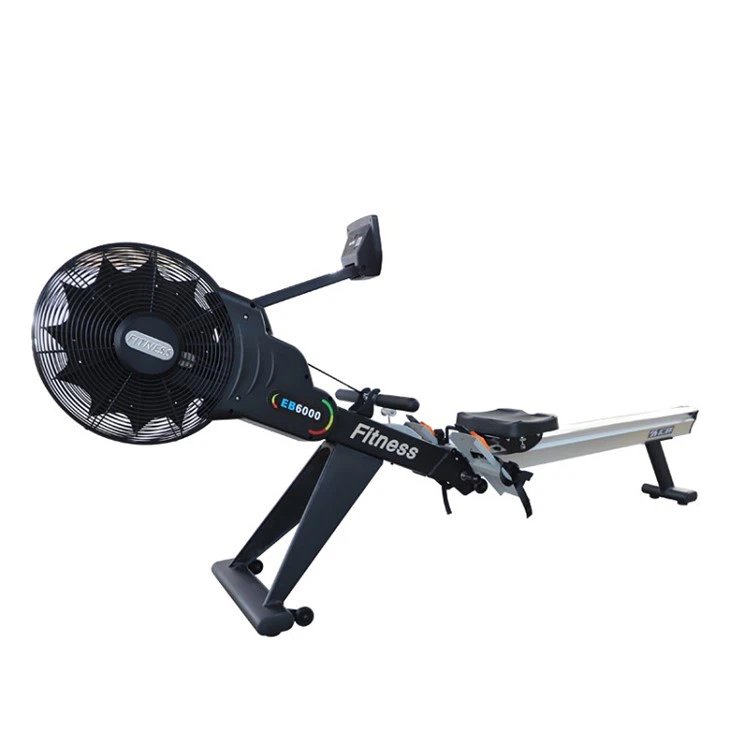
- Look for the damper. The damper is a device that controls the amount of air that can enter the flywheel housing. It is usually located at the front of the rower near the flywheel.
- Open the damper to increase the resistance. When the damper is fully open, more air can flow through the flywheel, creating more drag and thus increasing the resistance.
- Close the damper to decrease the resistance. A closed damper restricts the airflow, reducing the drag on the flywheel and making it easier to row.
- Experiment with different damper settings to find the right balance for your workout. For example, a lower damper setting might be good for a steady - state, endurance - based row, while a higher setting can be used for short, high - intensity intervals.
Hydraulic Rowers
Hydraulic rowers use cylinders filled with fluid to create resistance. They are generally more compact and affordable compared to magnetic and air rowers. The resistance on a hydraulic rower is adjusted by changing the tension on the hydraulic cylinders.
To adjust the resistance on a hydraulic rower:
- Find the resistance adjustment knob. This is usually located near the handle or on the frame of the rower.
- Turn the knob clockwise to increase the tension on the hydraulic cylinders, which in turn increases the resistance.
- Turn the knob counter - clockwise to decrease the tension and reduce the resistance.
Factors to Consider When Adjusting Resistance
When adjusting the resistance on a rower, there are several factors you should take into account to ensure a safe and effective workout.
Fitness Level
Your current fitness level plays a major role in determining the appropriate resistance level. Beginners should start with a lower resistance to avoid overexertion and injury. As you gain strength and endurance, you can gradually increase the resistance. For example, if you're new to rowing, start with a resistance level of 2 - 3 on a magnetic rower or a partially closed damper on an air rower.

Workout Goals
Your workout goals also influence the resistance setting. If your goal is to improve cardiovascular endurance, you might want to choose a moderate resistance level and row at a steady pace for an extended period. On the other hand, if you're aiming for strength and power, a higher resistance level with shorter, more intense intervals would be more suitable.
Rowing Technique
Proper rowing technique is essential, regardless of the resistance level. Using the correct form helps you engage the right muscles and reduces the risk of injury. Before increasing the resistance, make sure you have mastered the basic rowing technique, which includes a smooth catch, drive, finish, and recovery phase.
Tips for Optimal Resistance Adjustment
Here are some tips to help you make the most out of adjusting the resistance on your rower:
Warm - up and Cool - down
Always start your rowing session with a warm - up at a low resistance level. This helps to increase blood flow to your muscles and prepares your body for the workout. Similarly, end your session with a cool - down at a low resistance to gradually lower your heart rate and prevent muscle soreness.
Gradual Adjustments
Avoid making sudden and large changes to the resistance level. Instead, make small, incremental adjustments over time. This allows your body to adapt to the increased workload and reduces the risk of injury.
Listen to Your Body
Pay attention to how your body feels during the workout. If you experience pain or discomfort, reduce the resistance immediately. Your body is the best indicator of whether the resistance level is appropriate for you.
Contact for Procurement
If you're interested in purchasing a high - quality rower or have any questions about resistance adjustment or our products, we're here to assist you. Our team of experts can provide you with detailed information and guidance to help you choose the right rower for your needs. Whether you're looking for a commercial - grade rower for your gym or a luxury home rower for personal use, we have a wide range of options to meet your requirements. Feel free to reach out to us to start the procurement process and take your rowing workouts to the next level.
References
- American Council on Exercise (ACE). "Rowing Machine Workouts: Tips and Techniques."
- Mayo Clinic. "Benefits of Rowing Exercise."