

Shoulder Press Usage Guide
May 30, 2025
Leave a message
Introduction
The seated shoulder press machine is one of the most common strength training equipment in gyms, primarily used to strengthen the shoulder muscles. Whether you're a beginner or an experienced lifter, it offers a safe and effective way to target the deltoids, upper chest, and triceps. This article provides a detailed guide on how to use the seated shoulder press machine correctly, its benefits, and unique advantages to help you maximize your training results.
I. Correct Usage of the Seated Shoulder Press Machine
1. Adjusting the Machine
Seat Height: When seated, the handles should be at or slightly below shoulder level, ensuring your elbows are at about 90 degrees during the press.
Backrest Angle: Typically set vertically or slightly reclined (5-10 degrees) to maintain spinal neutrality and avoid excessive lower back arching.
Weight Selection: Beginners should start with lighter weights to master the movement; advanced users can increase resistance while maintaining proper form.
2. Step-by-Step Execution
Starting Position:
Sit firmly with your back against the pad, gripping the handles with palms facing forward (or as per machine design).
Keep elbows slightly below shoulder level, engage your core, and press your back into the support.
Pressing Up:
Exhale and push the handles upward until your arms are nearly fully extended (avoid locking the elbows).
Hold for a 1-2 second contraction at the top to maximize muscle engagement.
Controlled Descent:
Inhale and slowly lower the handles to the starting position, maintaining tension in the muscles.
Avoid letting the weight drop freely to reduce joint stress.
3. Training Recommendations
Sets and Reps:
Muscle Growth: 3-4 sets of 8-12 reps.
Endurance: 3 sets of 15-20 reps.
Common Mistakes:
Shrugging or Using Momentum: Avoid engaging the trapezius excessively; focus on shoulder activation.
Flaring Elbows Outward: Keep elbows slightly tucked to minimize shoulder strain.
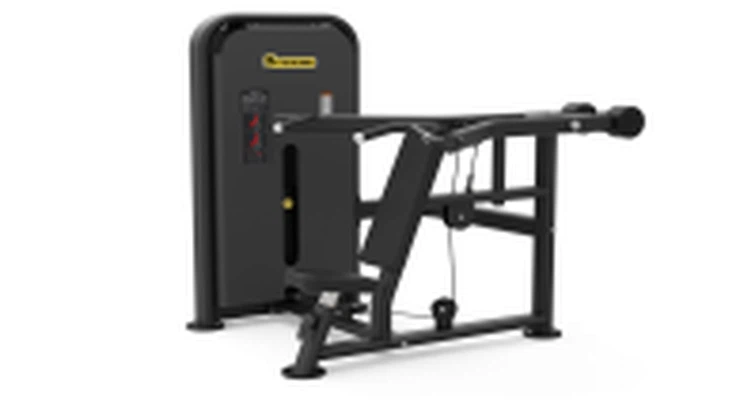
II. Benefits of the Seated Shoulder Press Machine
1. Targeted Shoulder Muscle Activation
Deltoid Development: Primarily works the anterior and medial deltoids, crucial for achieving rounded, defined shoulders.
Secondary Muscle Engagement: The triceps and upper chest assist, enhancing overall upper-body strength.
2. High Safety, Suitable for All Levels
Fixed Movement Path: Unlike free weights (e.g., dumbbell presses), the machine reduces stability demands, lowering injury risk.
Adjustable Resistance: Ideal for progressive training, from rehabilitation to high-intensity muscle building.
3. Improves Shoulder Stability and Function
Long-term use strengthens the rotator cuff, preventing injuries like impingement syndrome.
Enhances performance in pushing/lifting motions, benefiting sports (e.g., basketball, swimming).
4. Space-Efficient and Versatile
Fits commercial gyms and home setups due to compact design.
Some models allow grip variations (e.g., front/behind-neck presses).
III. Frequently Asked Questions
Q1: Can it cause shoulder impingement?
Low risk if used correctly. Tips:
Avoid excessive elbow flaring (keep them shoulder-width or narrower).
Control the weight; no jerky motions.
Q2: Does it replace dumbbell presses?
They complement each other. Machines offer stability; free weights improve functional strength. Combine both.
Q3: How to prevent trapezius overuse?
Keep shoulders depressed (pull shoulder blades down against the pad), focus on deltoid contraction.