

Why Every World Cup Pro Football Player Uses A Rowing Machine | Recovery Training Guide For World Cup Athletes
Jun 22, 2026
Leave a message
1. The Core Reason: Rowers Solve Football's Hidden Physical Strains
Football is a high-impact sport dominated by one-sided lower-body movements. Constant sprints, sudden stops, direction changes and physical clashes put massive strain on knees, ankles, hips and lumbar spines. Most players suffer from lactic acid buildup, joint wear and muscle imbalance after long matches.
Treadmills and stationary bikes require continuous weight-bearing on legs. In contrast, rowing machines deliver full-body workouts with zero joint impact. This makes them standard recovery gear in every national team training base for the World Cup, and many top players have personal rowers for exclusive use.
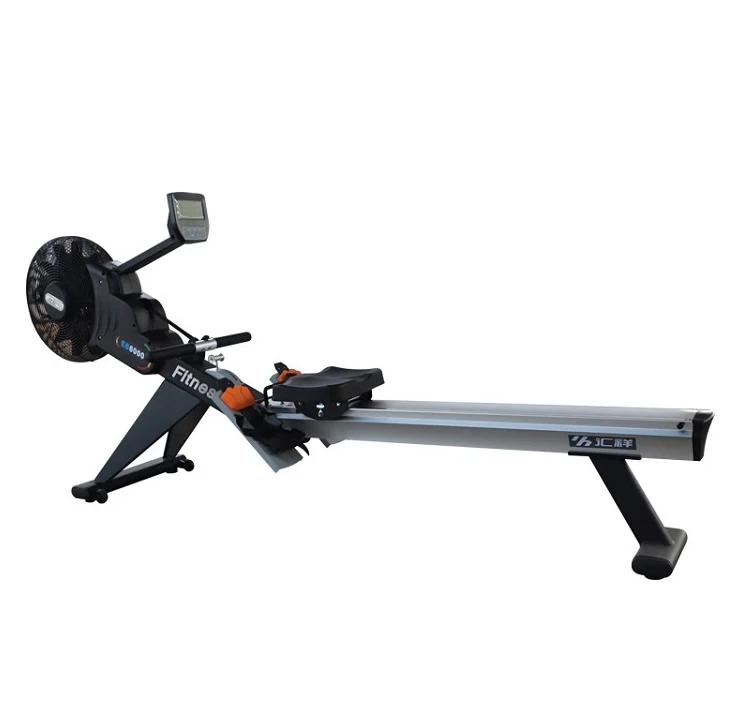
2. Six Unmatched Advantages for World Cup Players
① Zero joint pressure - Ideal for post-match recovery and injury rehab
Running and cycling create vertical impact force on meniscus and patellar tendons. Rowing is performed seated, with your full body weight supported by the seat, leaving knees and ankles unburdened.
Post-game recovery: 15–20 minutes of low-resistance rowing boosts blood circulation, flushes lactic acid out of fatigued leg muscles and relieves soreness in thighs and calves.
Injury rehabilitation: Players with sprained knees, twisted ankles or post-surgery injuries maintain cardio fitness without weight-bearing exercise, avoiding severe fitness drops from prolonged rest.
Perfect for tight World Cup schedules: Teams play a match every 3 days in the group stage. Light rowing sessions between fixtures reduce cumulative joint damage and cut injury risks drastically.
② Engages 86% of muscle groups to fix muscular imbalance
Football training mainly builds quads and glutes, while the posterior chain, upper back and shoulder stabilizers stay underdeveloped - a top cause of chronic lower back and shoulder pain. Rowing power distribution: 60% leg drive (quads, hamstrings, glutes) + 30% core stabilization + 10% back & shoulder pulling muscles.
Strengthen weak posterior chains: Correct rounded shoulders from constant ball dribbling and ease match-day backaches.
Boost sustained lower-body endurance: The leg push mimics squat mechanics, helping players maintain sprint speed late in games.
Constant core tension improves stability during tackles and physical duels.
③ Efficient cardio boost for repeated sprint endurance
World Cup footballers rely on intermittent aerobic fitness: repeated short bursts of sprinting followed by brief recovery. Rowing activates large muscle groups, delivering higher oxygen uptake in less time than jogging or cycling to build superior cardio reserve.
Pre-tournament conditioning: Interval rowing (1 min fast row + 2 min slow recovery) accelerates recovery speed after high-intensity sprints.
Jet lag relief: Light rowing after long international flights activates blood flow, reduces bodily edema from sitting and helps athletes reset their circadian rhythm quickly.
④ Fully adjustable resistance for all training stages
Resistance and stroke rate are fully customizable, covering all team training needs without extra equipment to fill limited training camp space:
Pre-match warm-up (5–10 mins low resistance): Raise body temperature and lubricate hip, knee and shoulder joints.
Post-match cool-down (15 mins ultra-light resistance): Active muscle recovery.
Endurance conditioning (high-resistance intervals): Maintain match-level stamina.
Off-day fitness maintenance: Full-body conditioning on rest days between matches.
⑤ Corrects posture to avoid chronic overuse injuries
Years of running and hunched dribbling lead to anterior pelvic tilt and weak lower backs. The pulling motion of rowing opens the chest and tightens mid-back muscles, balancing front and rear muscle tension. Physiotherapists across all World Cup teams recommend 10 minutes of gentle daily rowing for posture correction.
⑥ Built-in data tracking for scientific athletic management
Professional rowers track real-time metrics including power output, stroke rate, heart rate and distance, which coaches sync to backend monitoring systems:
Measure fatigue levels: A drop in rowing power at the same resistance signals incomplete muscle recovery, prompting coaches to reduce high-intensity drills the next day.
Set uniform team fitness benchmarks: Coaches quickly spot dips in athletic performance and prevent overtraining injuries.
3. Two Standard Rower Recovery Workouts Used by World Cup Squads
Workout 1: Post-match Active Recovery (Evening after full fixtures)
Total time: 18 minutes, low resistance, stroke rate 20–24 strokes per minute
0–5 mins: Very light steady row to boost full-body blood flow
5–15 mins: Slightly raised resistance at consistent pace, targeting hamstring and back release
15–18 mins: Minimum resistance slow row with deep breathing to speed lactic acid clearance Goal: Relieve heavy, achy legs without adding physical fatigue.
Workout 2: Off-day Fitness Maintenance (Rest day between two matches)
Interval format, total time: 25 minutes
5 mins slow warm-up row
4 rounds of intervals: 1 min moderate-power row (30 strokes per minute) + 3 mins slow recovery row
5 mins light cool-down row to finish Goal: Preserve cardio endurance without extra stress on leg joints and balance overall muscle strength.
4. Rowing Machine vs. Treadmill & Stationary Bike
Treadmill: High landing impact unsuitable for injured or post-match players; only trains lower legs with no back-strengthening benefits.
Stationary bike: Fixed seated position with no pulling movement, only building front thigh muscles and failing to fix muscular imbalance.
Rowing Machine: Zero impact, full-body balanced training, usable for both conditioning and recovery - perfectly matching the high-injury risk and packed match calendar of the World Cup.
5. Extended Content Topics for Social Media & Articles
Full equipment guide for World Cup national team training camps: Why rowers rank as the No.1 recovery device
Home rowing recovery routines for fans to copy pro footballers
Low-intensity rowing stretches to ease soreness and back stiffness after late-night World Cup viewing
Fitness equipment layout for youth football academies: How rowers reduce adolescent knee injuries